Tom’s Blog
When ‘enhancement’ Really Means Elimination
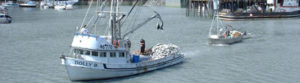
I’ve spent November to April working on Alaska Board of Fish issues, proposals, and comments (again!) and I’m sick of it. We’ve been fighting the local aquaculture aggrandizement for SIXTEEN years. When I worked my first season on a salmon seiner in Resurrection Bay, there were 6 seiners working hard, from the 6am start until the wind blew too hard to make fishing worthwhile. Every day that we could as the salmon returned.
Now there’s one–that is ONE– boat working (not very hard) because the ONLY opportunity to fish is given to the aquaculture association.
But that’s not the worst of it. Nope. Here’s the worst: they killed off the early natural run and fucked up their man-made run, so the return is so bad that no one is catching salmon. Because they’ve been decimated.
I can’t wait for that weir to be removed and the aquaculture association, too. This is the year it should happen…any day now…
Salmon People
The peoples of the Kuskokwim and Yukon are fighting for their lives: Salmon People.
25 Years of Unmet Goals
Although the document history of bad decisions goes back much further, let’s look at the last 25 years for Cook Inlet Aquaculture. The Phase II Cook Inlet Regional Salmon Enhancement Plan (2001/2006–2025) was designed to provide a 20-year “big picture” look at regional enhancement, focusing on infrastructure integration, habitat protection, and maximizing the value of the common property resource. This plan was written by Cook Inlet Aquaculture Association.
The following comparison highlights where results between 2001 and 2025 have aligned with Phase II goals and, more importantly, where significant gaps remain.
I. Goal: Significant Contribution to Common Property Fishery
- The Goal: Phase II established a standard that a project provides a “significant contribution” to the salmon resource when the common property fishery (commercial, sport, personal use) achieves at least a 50% harvest rate of the total return.
- Result (Goal Not Met): Over the last 15 years, this goal has frequently been unattainable due to the “Cost Recovery First” management priority.
- Management Shift: Since 2009, CIAA has operated under plans to achieve cost recovery revenue goals before opening Special Harvest Areas (SHAs) to the commercial fleet.
- Shortfalls: In many years (e.g., 2012, 2013, 2015, 2017, and 2019–2025), returns were insufficient to meet even the revenue goals, resulting in zero or minimal commercial common property harvest in areas like Resurrection Bay and Tutka Bay.
II. Goal: Financial Responsibility and Revenue Stability
- The Goal: Maintain the highest standards of financial responsibility and establish a reliable revenue source that consistently covers project operating costs.
- Result (Major Failure Point): The Association has faced extreme financial volatility and persistent cumulative losses.
- Tutka Hatchery: Over a 12-year period (2014–2025), the program incurred a total loss of $6,630,689, with an average annual loss of $552,557.
- Trail Lakes Hatchery: Incurred a 12-year total loss of $1,221,277.
- Headquarters: HQ expenses, which are funded by the 2% Salmon Enhancement Tax (SET), saw a 12-year loss of $5,798,092 against tax revenue.
- Recent Trends: Cost recovery goals have not been achieved in recent years (FY23, FY24, FY25).
III. Goal: Rehabilitate Self-Sustaining Stocks and Habitats
- The Goal: Rehabilitate stocks decimated by invasive species and protect habitat to ensure natural salmon production.
- Result (Mixed/Ongoing Challenge):
- Susitna Drainage: Production was described as a “production disaster” in 2009. While CIAA has invested nearly $4.7 million in Susitna watershed assessments, efforts to restore sockeye have been hampered by invasive northern pike.
- Shell Lake: Pike suppression efforts have been successful in reducing pike biomass (only 34 pike harvested in 2020), but sockeye fry gains have been “disappointing but not unexpected” due to low adult escapement.
- Paint River: The fish ladder opened in 2010 after decades of delay. While natural colonization by coho, chum, and pink salmon is documented, the goal of developing a sustained commercial fishery there remains unfulfilled.
IV. Goal: Maintenance of Facilities and Infrastructure
- The Goal: Maintain facilities and administrative practices to ensure safe, professional, and cost-effective performance.
- Result (Goal Not Met – Infrastructure Closures):
- Port Graham Hatchery: Despite a $2.8 million renovation in 2015, the facility faced persistent challenges with water and personnel. Operations were proposed for suspension in FY24 because of inconsistent performance and broodstock losses.
- Eklutna Salmon Hatchery: Fish production was suspended in 1998, and despite evaluations to bring it back online, it remains mothballed, with current work limited to site maintenance and potential sale.
Issues at Trail Lakes Hatchery and Bear Lake
Trail Lakes Hatchery, which manages sockeye and coho programs, has experienced several setbacks due to BKD:
- Sockeye Production and Survival: In 2011, Trail Lakes reported that sockeye salmon fry experienced significant mortalities after release due to recurring coldwater disease and BKD. More recently, in 2018, sockeye egg collection goals for Bear Lake were not met because returning broodstock displayed characteristics of BKD.
- Coho Egg Culling: The coho program has also been affected. In 2011, 4,100 coho eggs from the Bear Lake stock had to be culled specifically due to BKD. This trend continued in 2012, where another 4,100 coho eggs were culled for the same reason.
- Regulatory and Treatment Challenges: CIAA historically treated returning female broodstock with erythromycin (an antibiotic) to manage BKD. However, a change in regulatory requirements in 2018 temporarily prevented this treatment, contributing to the reduced egg collection that year. Approval to resume erythromycin treatment for all female broodstock was granted starting in 2019.
Hatchery Impacts: The Broadest Analysis
McMillan et al. (2023) provide a global synthesis of peer-reviewed research from 1970 to 2021 regarding the impacts of hatchery-produced salmonids on wild salmonid populations. The study analyzed 206 publications covering 15 species across 22 countries to evaluate effects on Viable Salmonid Population (VSP) parameters, including abundance, productivity, diversity, and distribution.
Key Findings
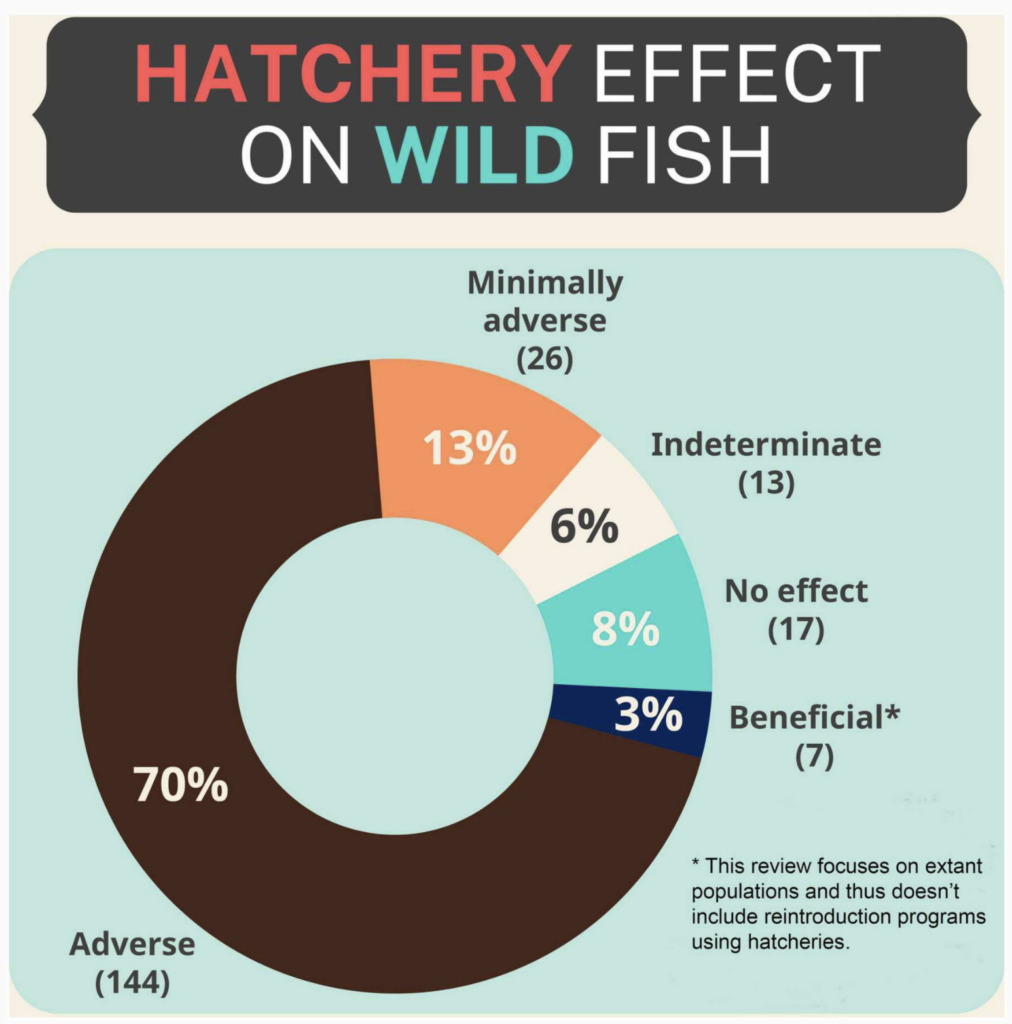
- Prevalence of Adverse Effects: A total of 83% of the reviewed studies reported adverse or minimally adverse effects on wild salmonids. In contrast, only 3% reported beneficial effects, nearly all of which were linked to intensive recovery programs for highly depleted populations.
- Genetic and Ecological Pathways: The most frequently reported adverse effects were genetic impacts on diversity, followed by negative impacts on productivity and abundance through both genetic and ecological processes. Genetic studies often found reduced effective population size and altered population structure due to interbreeding with hatchery fish.
- Impacts by Hatchery Type:
- Production hatcheries, which focus on providing fish for harvest, showed the highest rate of negative results, with 92% reporting adverse or minimally adverse effects.
- Supplementation programs, despite using modern practices like integrating wild broodstock to reduce risks, still reported adverse effects in 64% of studies.
- Recovery programs had more balanced results, with 29% reporting beneficial effects, though 30% still found adverse or minimally adverse impacts.
- Marine Environment Effects: In the North Pacific Ocean, large-scale hatchery releases have triggered density-dependent competition, resulting in reduced growth, body size, fecundity, and productivity for wild populations.
Conclusions and Future Research
The authors conclude that hatcheries typically pose significant risks that negatively impact the diversity, productivity, and abundance of wild salmonid populations. These adverse effects likely limit the efficacy of habitat restoration and the capacity of wild stocks to adapt to stressors like climate change.
The paper identifies several areas for future investigation to better understand the full extent of these impacts, including:
- Epigenetics: How hatchery rearing alters gene expression and whether these changes are heritable.
- Adaptive Capacity: The long-term consequences of genetic changes on a population’s ability to survive in a warming environment.
- Disease and Fishery Effects: Underrepresented areas of research regarding how hatcheries influence disease resilience and unsustainable mixed-stock fisheries.
The researchers have also made their findings available through a publicly accessible database intended to serve as a standing resource for scientists and decision-makers.
Fisheries Management and Ecology Volume 30, Issue 5. Oct 2023. Pagesi-iv, 437-554 Link to article: https://onlinelibrary.wiley.com/doi/epdf/10.1111/fme.12643
More on Trawling
There’s no such thing as mid-water trawl when the net is on the bottom 40-80% and sometimes 100% of the time. There’s no such thing as bycatch limits when the governing agencies keep raising the limits! Trawlers destroy more seafood than all other commercial endeavors harvest!
https://conservefish.org/2023/12/14/the-myth-of-mid-water-in-the-alaska-pollock-fishery/
Nylon Fish Farm Nets Release Microplastics
Beavers, Good or Bad?
https://drive.google.com/file/d/178_A94v3ZbfGng1MICdmHz9P5w3Z5ftt/view?usp=sharing
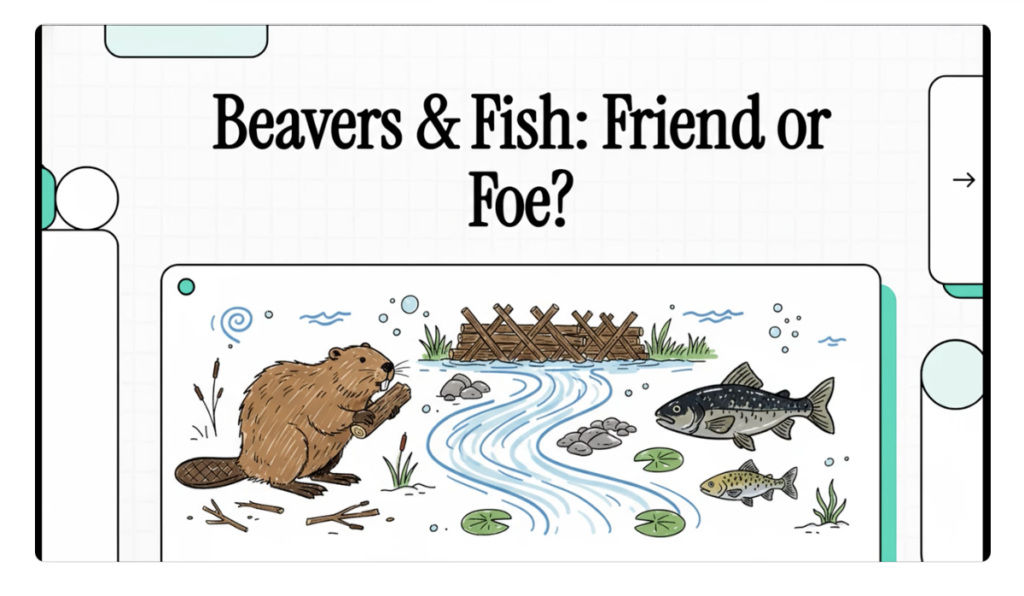
You’d be surprised! Below is the Kemp, et.al. study on Qualitative and Quantitive Effects of Reintroduced Beavers, BUT, let’s watch a short video (link above) or listen to an audio overview ( Press Play Arrow below) before we dive in to the research.
Here’s a summary: The provided text outlines a scientific review and expert survey regarding the reintroduced beaver’s impact on fish and freshwater ecosystems. This comprehensive study utilizes a meta-analysis of existing literature alongside a questionnaire sent to international experts to weigh the ecological benefits against potential costs. Key findings indicate that beavers generally enhance habitat complexity and improve fish productivity through the creation of refuges and increased invertebrate food sources. Conversely, the sources identify barriers to fish migration and the siltation of spawning grounds as primary negative consequences, particularly in smaller tributary streams. Ultimately, the research suggests that while impacts vary by species and location, the overall influence of beavers is perceived as positive for river restoration and biodiversity.
Please Stop Loaning Money to CIAA – They are $20,000,000.00 in Debt
CIAA is twenty million dollars in debt to the State of Alaska and has no viable way of paying it off, ever. By their accounting, they have assets valued at $8.7 million, debt of $19 million, and they go further in debt every year. There is no project in the world that can fix this.
CIAA receives (on average) less than half-a-million dollars a year from the 2% fish tax. If they ceased operations now (stop going further into debt!) the fish tax could pay the loans off over the next 40+ years. If they are allowed to continue to increase that debt (given another un-repayable loan) eventually a bankruptcy judge will extinguish CIAAs’s entire debt to the State of Alaska as completely un-payable. It would be against the State’s best interest to let that happen.
Any worthwhile project operated by CIAA right now (i.e. pike eradication in upper Cook Inlet) can be done by watershed protection groups. The balance of program benefits vs. cost is so negative that it isn’t worth maintaining. The most prudent action now is for the Division of Investments to stop providing un-repayable loan funds; CIAA to cease operations; designate all future 2% fish tax funds toward debt re-payment.
My summary of CIAA Financial problems: the organization was founded and sustained with excessive grant monies (via Ted Stevens) until 2008. By 2010 CIAA was scrambling to keep their multi-million dollar unsuccessful projects funded, but were unable to understand the need to make projects actually pay off. It was (and still is) too difficult of a switch. The entity was created to funnel huge amounts of federal funds to Alaskan pockets–NOT to succeed. The long list of worthless projects they’ve initiated have only HARMED natural runs. The CIAA director in 2010 told a Board of Fish work-team that he had no idea what a business plan was (I was there).
I cry to think of the *good* those millions and millions of dollars might have done in the hands of people who truly care about Alaska’s resources,
My History with Cook Inlet Aquaculture Association
I have been commercial fishing since 1973, owner of my own seiner since 1983
I’ve been negatively impacted by this organization for the past 15 years—longer if you include the mismanagement prior to 2010, which I’ve summarized below.
In Kachemak Bay, CIAA started a hatchery inside Tutka Lagoon, They ruined a great fishery there. We use to have a lagoon opener there every year in July—a natural pink salmon run. Before CIAA took over fishermen made a great living in K-bay. Now most of K-Bay is planted terminal fisheries, which they have to plant annually.
Resurrection Bay in Seward had a great pink and chum fisheries from 1974 to 1990.
History on Bear Lake: The FRED division took over Bear Lake in the 70’s and poisoned the lake for the benefit of coho, but they let about 1000 sockeyes every year into the lake. They abandoned the project and eventually CIAA stepped in.
When CIAA took over in Resurrection Bay, they planted fish in Grouse Lake, didn’t implant them properly so the sockeyes milled around in saltwater till they were ready to spawn, then went up the river. CIAA didn’t let any fish into the lake and ended up selling them all for dogfood at .10 a lb. After several years’ mistakes they succeeded in wiping out the natural run there.
Next, they targeted Bear Lake, which was never suppose to have any cost recovery. They formed the Bear Creek Management Plan which would give them a 50/50 split with common property for the fishermen.
But in 2010, when CIAA’s cash pipeline from the federal government went dry, they petitioned the Board of Fish for 100% of Resurrection Bay salmon catch, going as far as attempting to stop sport fishing as well as commercial fishing in a desperate attempt for money. Although this is a violation of Alaska law, by designating a natural resource to a single user group, the BOF granted them 2 years since that is when the BOF would meet again for Lower Cook Inlet Area.
In 2012 CIAA requested to keep taking 100%. The BOF told them they need to put together a committee to solve their financial problems. The board consisted of 2 CIAA board members, 2 commercial fishermen (who were both on the CIAA board), and 2 ADF&G Biologists, one being the senior biologist—Lee Hammarstrom. The meeting lasted less then 1 minute: Lee walked in, said “You can have them all. Meeting’s over.” Then he left.
Since CIAA started taking 100% of the Bear Lake run, the common property fisheries have had very little, just mainly the clean up after the cost recovery boats leave, which is basically nothing.
From 2010 to 2025, CIAA has taken 1.1 million sockeyes out of Resurrection Bay. At a 4.5 average that’s about 4,950,000 lbs of sockeyes that CIAA gets premium money for since it is a early run and competes with the prices of Copper River Sockeyes. The Fishermen get nothing from it.
Since CIAA took over and introduced a early run sockeye from Tustumena Lake stock—to compete with Copper River for a better price—the local natural run has been decimated. CIAA lets 13.500 early run sockeyes into the lake then they sell anything after that for cost recovery (any of the natural run that makes it upriver) and the take broodstock from the 13,500 fish allowed in. It’s a vicious, killing cycle that has wiped out the natural Bear Lake stock.
That’s how CIAA manages their areas—for perpetual “management” not to benefit the natural stocks. Since CIAA took over commercial fisherman have lost millions of dollars from destroyed fisheries or closed fisheries under CIAA managed projects: both pink and chum runs in Resurrection Bay and the pink fisheries in K-Bay.
Fisherman use to make $200-$300K a year in K-bay but once CIAA took over they were lucky to make $50-$100K a year.
CIAA creates terminal fisheries, mainly for their board members to be able to fish locally in K-Bay and to justify interception of upper inlet sockeyes.
CIAA has been taking 100% of the fish they produce, decimating natural runs, and they are going further and further in debt. This needs to stop.
The community of Seward is negatively impacted by the Bear Creek weir, which is grossly mismanaged (I have videos on YouTube). The manufactured stock is not healthy and the natural run has been sabotaged, not protected. It sickens me what CIAA has done in my home.
Trail Lakes Hatchery was marginal, at best, when the state divested itself of the facility in 1988. It’s been a mess ever since with disease and bad water, and needs to be returned to the state for conversion to a tourist facility or destruction.
The only reason the Board of CIAA continues to fight to keep their existence is to have a cover for intercepting Upper Cook Inlet sockeye salmon. Of the 1,400 permit holders, less than 20 are active commercial fishermen, most in the Lower Cook Inlet area, and they have a death grip on CIAA’s existence to justify opening Kachemak Bay while the reds are running into the upper Cook Inlet.
