
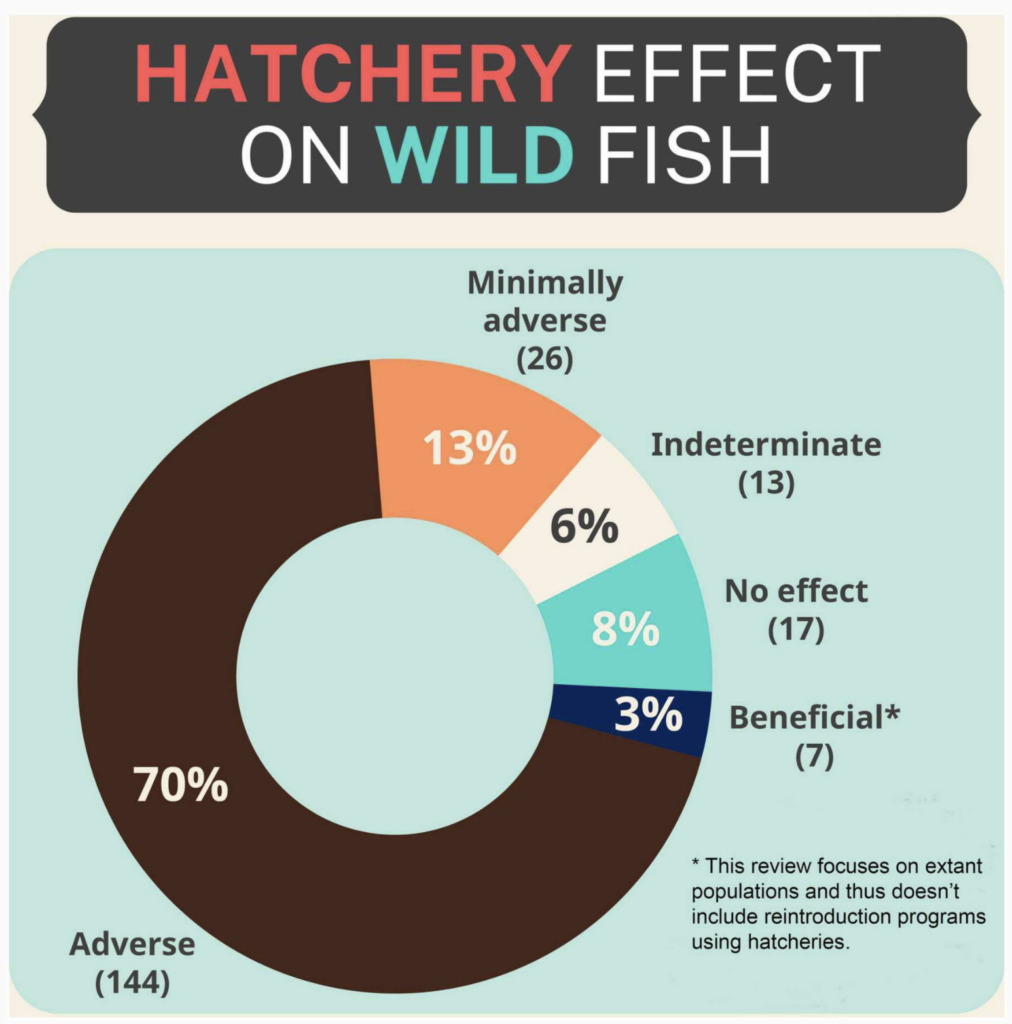
McMillan et al. (2023) provide a global synthesis of peer-reviewed research from 1970 to 2021 regarding the impacts of hatchery-produced salmonids on wild salmonid populations. The study analyzed 206 publications covering 15 species across 22 countries to evaluate effects on Viable Salmonid Population (VSP) parameters, including abundance, productivity, diversity, and distribution.
Key Findings
- Prevalence of Adverse Effects: A total of 83% of the reviewed studies reported adverse or minimally adverse effects on wild salmonids. In contrast, only 3% reported beneficial effects, nearly all of which were linked to intensive recovery programs for highly depleted populations.
- Genetic and Ecological Pathways: The most frequently reported adverse effects were genetic impacts on diversity, followed by negative impacts on productivity and abundance through both genetic and ecological processes. Genetic studies often found reduced effective population size and altered population structure due to interbreeding with hatchery fish.
- Impacts by Hatchery Type:
- Production hatcheries, which focus on providing fish for harvest, showed the highest rate of negative results, with 92% reporting adverse or minimally adverse effects.
- Supplementation programs, despite using modern practices like integrating wild broodstock to reduce risks, still reported adverse effects in 64% of studies.
- Recovery programs had more balanced results, with 29% reporting beneficial effects, though 30% still found adverse or minimally adverse impacts.
- Marine Environment Effects: In the North Pacific Ocean, large-scale hatchery releases have triggered density-dependent competition, resulting in reduced growth, body size, fecundity, and productivity for wild populations.
Conclusions and Future Research
The authors conclude that hatcheries typically pose significant risks that negatively impact the diversity, productivity, and abundance of wild salmonid populations. These adverse effects likely limit the efficacy of habitat restoration and the capacity of wild stocks to adapt to stressors like climate change.
The paper identifies several areas for future investigation to better understand the full extent of these impacts, including:
- Epigenetics: How hatchery rearing alters gene expression and whether these changes are heritable.
- Adaptive Capacity: The long-term consequences of genetic changes on a population’s ability to survive in a warming environment.
- Disease and Fishery Effects: Underrepresented areas of research regarding how hatcheries influence disease resilience and unsustainable mixed-stock fisheries.
The researchers have also made their findings available through a publicly accessible database intended to serve as a standing resource for scientists and decision-makers.
Fisheries Management and Ecology Volume 30, Issue 5. Oct 2023. Pagesi-iv, 437-554 Link to article: https://onlinelibrary.wiley.com/doi/epdf/10.1111/fme.12643
